Hierarchical Needs and Income-Stratified Drivers of Residential Satisfaction in South Korea: Conditional Patterns and Neighborhood Relations
 ; Park, In Kwon***
Abstract
Understanding how residential satisfaction varies across income strata is essential for targeted housing policy, yet few studies incorporate hierarchical-need perspectives. Using the Korea Housing Survey and a theory-grounded PLS-SEM with hierarchical components, we model residential satisfaction. Some determinants exhibit marked income-specific patterns: Low-income households prioritize basic functionality (β=0.208) and housing space (β=0.602) while placing less emphasis on neighborhood relations (β=0.065); conversely, in higher-income households, neighborhood relations (β=0.118) are more influential than physiological needs (β=0.089) and housing space (β=0.005). Safety (30.2%) and infrastructure accessibility (31%) are primary drivers in all income groups. Our analysis reveals that foundational needs—physiological needs and safety—interact with non-basic domains (accessibility and housing-consumption class), indicating conditional effects compatible with Maslow’s hierarchy in this context. Neighborhood relations, functioning as social capital, partly mitigate safety shortfalls, though their importance declines at lower incomes and becomes clearer once basic housing performance is secured; while safety shortfalls erode infrastructure accessibility benefits in middle/high incomes, they can be buffered by good transit/services among lower-income households. In affluent areas, meeting physiological needs may dampen returns to accessibility/status. These findings suggest a dual strategy: implement deficiency-need upgrades for low-income communities, and enhance external safety plus lifestyle-cultural amenities for high-income communities, prioritizing social-cohesion programs after foundational needs are met.
Keywords:
Residential Satisfaction, Income Strata, Interaction Effects, Maslow’s Hierarchy of Needs, Neighborhood Relations키워드:
주거만족도, 소득 계층, 상호작용 효과, 메슬로우의 욕구 위계 이론, 이웃관계Ⅰ. Introduction
Despite a wealth of studies on residential satisfaction, little is known about how its determinants differ across income groups. Housing deficits occur when one’s housing situation falls below institutional norms (Morris and Winter, 1975) or when one’s actual housing conditions fail to meet subjectively formed reference conditions (Galster, 1985). These norms, reference conditions, and actual housing circumstances may differ substantially across income strata. Since income constitutes a primary basis for housing policy, it is crucial to understand how the determinants of residential satisfaction vary by income class and to implement differentiated housing policies accordingly.
Residential dissatisfaction can lead to adaptive behaviors such as relocation, housing modifications (e.g., renovations or remodeling), and changes in family composition, underscoring the importance of tailoring housing policies to these income‐based differences (Morris and Winter, 1975). Low-income households, in particular, face constraints on housing affordability and are therefore more sensitive to deficit needs. Consequently, their average satisfaction tends to be lower, and unmet deficit needs can negatively affect growth needs, potentially amplifying satisfaction disparities between groups. Moreover, low-income and higher-income households differ not only in physical housing attributes but also in psychological and emotional dimensions.
This suggests that the determinants of housing satisfaction are income-contingent: The effects of individual determinants on residential satisfaction may vary by income group.
In addition, interaction effects between lower-order needs–which are closely related to income level–and neighborhood relations should be incorporated into the analysis. This can reveal which combinations of attributes most improve housing satisfaction across income groups.
According to Maslow’s hierarchy of needs, when lower-order needs such as physiological and safety needs are satisfied, higher-order needs arise. Moreover, social capital theory suggests that when cognitive social capital–including neighborhood relations–is formed and social cohesion is established, there are significant associations with overall quality of life, including perceived safety, the use of mobility and accessibility, and engagement with the environment and public spaces (Putnam, 2000; Sampson et al., 1997). Therefore, satisfaction with neighborhood relations may interact with other determinants. Furthermore, income may stratify these interactions–constraints among lower-income groups versus selective networking among higher-income groups–consistent with socioeconomic gradients in social capital and participation (Putnam, 2000; Glaeser et al., 2002).
We empirically distinguish the principal determinants of residential satisfaction and examine differences in their effect sizes and interaction effects. For this, we propose a theory-grounded conceptual framework and estimate it using PLS-SEM. In specifying the Maslow-related constructs, we draw on prior work linking Maslow’s need theory to housing needs and housing functions (Jung and Lee, 2023; Kim and Kim, 2023).
Our conceptual framework delineates four domains–(1) basic needs, (2) housing space, (3) housing consumption class & tenure capability, and (4) neighborhood relations & environmental context–into nine single indicator latent variables. Applying PLS-SEM not only enables direct comparison of the relative influence of each determinant and of how these influences vary across income strata, but also makes it possible to test conditional (interaction) effects among determinants.
Ⅱ. Literature Review
1. Income-Differentiated Drivers of Residential Satisfaction
Although physical housing conditions, neighborhood relations, and socioeconomic status are widely recognized as core drivers of residential satisfaction, their relative importance and conditional (interaction) effects vary systematically across income strata. Housing satisfaction is defined as the sense of contentment an individual experiences when their home provides what they need or desire (Mohit and Raja, 2014). Housing deficits occur when one’s housing falls below objective, institutionally defined norms (Morris and Winter, 1975), and these norms may embody different minimum acceptable standards for different income groups. Similarly, the relative gap between an individual’s subjectively formed reference condition regarding housing and neighborhood and their actual housing circumstances determines housing satisfaction (Galster, 1985), and this gap can vary across income groups due to differences in asset endowments and life experiences. In other words, different income groups form their expectations based on distinct life trajectories and reference standards.
Low-income households, dissatisfied with their housing, may seek to improve or relocate but often lack the purchasing power to escape substandard conditions (Galster, 1985). Because housing satisfaction is a relative and dynamic concept, identical improvements in housing may yield smaller increases in satisfaction among higher-income households than among lower-income ones, as explained by psychological mechanisms including the aspiration effect and the principle of diminishing marginal utility (Wang and Wang, 2019).
While housing satisfaction has been widely studied, relatively few works have focused on how its determinants vary systematically across income strata. Prior studies suggest that the determinants of housing satisfaction can be distinguished across three broad domains: physical conditions, neighborhood relations, and socioeconomic status.
The physical condition of housing–encompassing safety, daylighting, moisture control, ventilation, pest prevention, leak protection, and heating–is a baseline requirement for adequate living and is equally critical for both middle-income and vulnerable households (Park and Lim, 2020). In contrast, for low-income groups, policing and crime-prevention measures have a relatively greater impact on housing satisfaction (Lee and Namgung, 2018).
Across all income groups, neighborhood relations and residential noise levels are key drivers of satisfaction, while the educational environment is particularly important for middle-income families and access to commercial facilities is a primary concern for high-income households (Lee and Namgung, 2018). For vulnerable (low-income) households, security, fire-safety provisions, parking, and pedestrian infrastructure carry more weight than they do for other strata, whereas middle-income households place relatively greater emphasis on access to local amenities and strong neighborhood ties (Park and Lim, 2020).
Housing-consumption class (HCC) reflects both the economic capacity to afford housing and the social status associated with housing consumption. It is represented by housing type, housing quality, and the proportion of income allocated to housing expenses, and it influences residential satisfaction not only through symbolic signals of wealth and identity but also through the material burden of housing costs. Individuals consume visible status goods to signal their relative wealth (Glazer and Konrad, 1996). Within this context, housing acts as an extension of the self–both reflecting personal identity and signaling membership in or distinction from particular social groups. Consequently, discussions of housing status must treat quantity and quality of residence as independent dimensions (Zavisca and Gerber, 2016). Households may acquire or consume housing as a strategy in the competition for socioeconomic standing (Wei et al., 2017). Housing prices can serve as an indicator of social status and prestige, with higher prices generally reflecting superior infrastructure (Jung and Lee, 2023). However, the relationship between housing cost as a share of income and housing satisfaction follows an inverted U-shape, peaking at around 30 percent of income (Newman and Holupka, 2016; Shamsuddin and Campbell, 2022). Low- and middle-income households that devote a high share of their income to housing may suffer declines in quality of life–such as negative impacts on child development–when housing‐cost burdens become excessive (Shamsuddin and Campbell, 2022).
In Korea, living in an apartment has come to symbolize wealth and serve as a proxy for social status, whereas residents of multi-household dwellings tend to perceive their own socioeconomic standing as lower (Park and Hong, 2009; Kang and Seo, 2022). Moreover, as housing stock ages, service quality deteriorates, and market value declines, giving rise to a social perception of “worn-out” space that may further depress perceived status. By contrast, lower-income groups–for whom reducing housing‐cost burdens and meeting other basic needs are paramount (Newman and Holupka, 2016)–may be less sensitive to the status signals conveyed by housing.
Prior research has compared residential satisfaction determinants across income groups but has largely analyzed the impact of individual housing attributes on subjective satisfaction in isolation. This narrow focus limits the development of comprehensive policy recommendations. In contrast, our study aggregates individual attributes into latent constructs and examines their principal interaction effects with each other.
2. Interactive Effects Between Neighborhood Relations and Deficiency Needs
Prior research suggests that the determinants of housing satisfaction do not operate independently but interact conditionally, particularly across income groups. In this section, we review prior research focusing on two areas: conditional effects linked to unmet basic needs and contextual effects related to neighborhood relations.
According to Maslow’s hierarchy of needs (Maslow, 1970), deficiencies in lower-order needs dampen the influence of higher-order needs on housing satisfaction. Specifically, Maslow (1970) classifies fundamental human needs into five categories- physiological, safety, social (love/belonging), esteem, and self-actualization–often depicted as hierarchically ordered rather than fully parallel. However, Kenrick et al. (2010) note that motivational systems can overlap and shift with situational cues; under threat, self-protection may coincide with affiliation because “safety in numbers” makes social alignment protective. In collectivist and housing-centered settings such as Korea, perceived safety and social belonging may therefore co-produce one another (e.g., via social cohesion and collective efficacy), rendering a more “parallel” interpretation plausible.
Accordingly, existing housing studies can be grouped into two lines of inquiry: (i) conditional effects under unmet basic needs and (ii) contextual effects linked to neighborhood relations. In the context of housing satisfaction, some studies have shown that when physiological and safety needs are not met, the effects of social (love/belonging), esteem, and self-actualization needs may be constrained. McCray and Day (1977) employed Maslow’s framework to show that urban public housing satisfies only minimal levels of physiological and safety needs, fails to meet psychological and social needs, and thus prevents residents from advancing to higher‐order needs. Smith (2011) demonstrated that when the deficiency in safety perceptions (fear of crime) is high, sense of belonging and sense of community (community attachment) weaken, thereby blocking the pathway to esteem and self‐actualization needs. In other words, satisfying a dwelling’s physiological functions and safety requirements is a conditioning factor that can constrain or modulate the magnitude of the effect of infrastructure accessibility, housing space, and socioeconomic status on residential satisfaction, particularly when basic needs are unmet.
Additionally, Maslow’s hierarchy of needs can serve as a framework for systematically understanding the motivational factors associated with residential attributes (Zavei and Jusan, 2012), making it a valuable conceptual basis for examining the determinants of housing satisfaction. For example, physiological, safety, social (love/belonging), and esteem needs are deficiency needs whose motivational force diminishes once they are at least partially satisfied, whereas self-actualization, as a growth need, increasingly sustains motivation as it is fulfilled (Maslow, 1970). These contrasting characteristics of deficiency versus growth needs may account for differences in the magnitude of housing satisfaction determinants across income groups.
In this sense, neighborhood relations–conceptualized as social capital–may buffer unmet lower-order needs and thereby attenuate the dampening of other residential attributes’ effects on satisfaction. Neighborhood relations may also give rise to contextual effects on other determinants. In residential settings, neighborhood relations are linked to place social bonding, and this in turn influences place attachment and the dynamics of social capital (e.g., social connectedness, social trust, reciprocity) amid urban renewal, all of which have been shown to exert significant impacts on housing satisfaction (Hesari et al., 2019; Du et al., 2020; Park, 2025). Moreover, social capital, including out-group ties, attenuates the influence of income and social comparisons on subjective well-being (Bartolini et al., 2023). Low social capital–lacking emotional and material support networks–can intensify materialistic drives and compensation through income or status, potentially amplifying the role of socioeconomic status when basic needs are strained (Bartolini et al., 2023).
Social cohesion further buffers the anxiety that arises when neighborhood safety is insufficient. Choi and Matz-Costa (2018) demonstrated an interaction effect between perceived neighborhood safety and social cohesion on older adults’ health. Additionally, collective efficacy significantly reduces violent crime rates (Sampson et al., 1997), thereby enhancing neighborhood safety. In Korea, where housing form can be stratified by socioeconomic resources, collective efficacy may translate into perceived safety in housing-type-specific ways.
By examining the conditional effects of unmet basic needs and the contextual effects of neighborhood relations, this study complements the aforementioned prior research. First, the classical interpretation of Maslow’s hierarchy of needs is neither strictly linear nor universal; the relative priority of needs can be reordered by socioeconomic and cultural contexts (Tay and Diener, 2011). Consequently, empirical research is required to determine whether similar contextual effects operate in the domain of residential satisfaction. Second, the contextual effect of neighborhood relations likely varies across income strata, as income shapes the time and resources households can devote to neighborly interactions, thereby influencing the strength and quality of those social ties. Identifying such heterogeneity is essential for formulating housing policies that are truly demand-responsive. Nevertheless, important gaps remain. Existing PLS-SEM studies on residential satisfaction have largely relied on single-group specifications and have seldom incorporated interaction terms. To examine cross-income heterogeneity in conditional and contextual pathways, this study estimates a unified model that combines income-group MGA, higher-order constructs, and interaction effects.
Prior work has also tended to analyze housing attributes in isolation, which restricts the ability to derive comprehensive and demand-responsive policy implications. Drawing on Maslow’s hierarchy of needs, we posit that unmet physiological and safety needs moderate other determinants (H3) and that these mechanisms vary across income strata (H2, H5). We further theorize neighborhood relations as an interacting determinant (H4) within a direct-effects framework (H1), as summarized in <Figure 1>. Our research design makes it possible to: (i) test the contextual effects of neighborhood relations on all other determinants within the overall model (H3 in <Figure 1>), and (ii) compare these effects across income groups, thereby revealing for which strata the contextual mechanisms identified in prior studies are most pronounced.
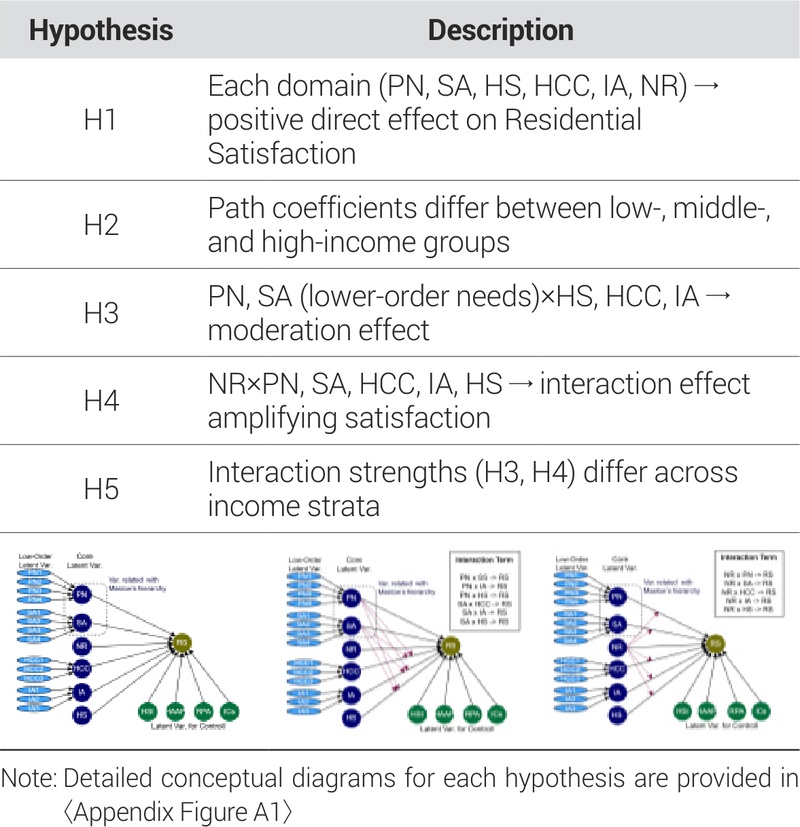
Hypotheses and structural model of the study
Ⅲ. Research Methods
1. Research Design
This study empirically examines residential satisfaction by modeling its key latent constructs, ensuring conceptual validity and testing how their effects differ across income groups. Rather than treating housing satisfaction as a single observed indicator, we conceptualize it as a multidimensional latent construct encompassing physical, social, and socioeconomic attributes. Since the relative importance of these determinants varies across income groups, a multi-group comparison is essential to capture heterogeneous patterns and derive demand-responsive policy implications.
To address this objective, we employed Structural Equation Modeling (SEM), which enables the simultaneous estimation of complex relationships among latent constructs. In particular, within the broader family of SEM techniques, we adopted the PLS-SEM (Partial Least Squares Structural Equation Modeling) approach due to its suitability for modeling hierarchical constructs, accommodating non-normal data, and facilitating cross-group comparisons.
In addition, we modeled some constructs hierarchically by specifying lower-order components (LOCs) and aggregating them into higher-order constructs (HOCs) through a Reflective–Formative Disjoint Two-Stage Approach. This strategy secures indicator-level invariance across income groups while still enabling subgroup comparisons, thereby mitigating multicollinearity and enhancing the validity of multi-group analysis. This multidimensional, hierarchical approach–seldom employed in prior studies that have typically relied only on observed indicators–overcomes previous limitations and provides new insights into how physiological needs, safety, and neighborhood relations exert direct and indirect effects on residential satisfaction, especially among lower-income groups.
We additionally report supplementary directional mediation checks in the Appendix as a diagnostic of Maslow-consistent linkages, recognizing that causal ordering cannot be identified with cross-sectional data.
2. Data and Sample
For the empirical analysis, we used data from the 2022 Korea Housing Survey (KHS), which initially comprised 51,325 households. After cleaning the data and excluding observations with missing values, the final sample included 36,315 households. To enable Multi Group Analysis (MGA), we categorized these households into low-income (1st quintile), middle-income (2nd–4th quintiles), and high-income (5th quintile) groups based on income thresholds.
Prior evidence suggests that the determinants of residential satisfaction differ across income strata (e.g., Lee and Namgung, 2018). Accordingly, we stratified households into three groups (low, middle, and high income) for the multi-group analysis. Following the OECD’s operational definition, we define the low-income group as households in the bottom income quintile (Q1: bottom 20% of the income distribution).1)
The middle-income group served as the reference category, allowing us to compare the relative effects of determinants between the lower and upper ends of the income distribution.
Since the KHS tends to underrepresent high-income households in its sample distribution, we adopted the income thresholds defined in the 2022 Korea Household Income and Expenditure Survey: 1st quintile ≤KRW 1.93 million, 2nd–4th quintiles KRW 1.93–6.76 million, and 5th quintile >KRW 6.76 million. Based on this classification, the final sample comprised 10,349 households in the low-income group, 22,950 in the middle-income group, and 3,016 in the high-income group–providing ample sizes for robust income-stratified analysis.
3. Conceptual Framework and Theoretical Basis
We propose a theory-grounded conceptual framework that delineates four domains: (1) basic needs, (2) housing space, (3) housing-consumption class (HCC) & tenure capability, and (4) neighborhood relations & environmental context. Specifically, domain (1) bundles physiological and safety needs and maps onto Maslow’s lower-order needs; consistent with need-hierarchy theory, we model domain (1) as interacting with the non-basic domains (2)–(4) (i.e., domains beyond Maslow’s lower-order needs, without implying that these domains are inherently non-essential; their salience may be reweighted by socioeconomic context)–unmet basic needs attenuate, whereas satisfied basic needs condition the effects of housing space, housing-consumption class & tenure capability, and neighborhood context on residential satisfaction. Domain (2) captures the spatial adequacy/consumption of dwellings (e.g., per-capita floor area, crowding), which is expected to exert a direct effect on satisfaction and to partly mediate HCC-related sorting via housing choice; its returns are further conditioned by infrastructure accessibility and tenure continuity. Within domain (4), guided by social capital theory, neighborhood relations (trust, reciprocity, participation) are specified as moderators and/or mediators that amplify the payoffs from HCC and housing space, while environmental quality and infrastructure accessibility provide complementary contextual channels.
4. Latent Constructs and Measurement
The four conceptual domains outlined above were operationalized into nine latent variables for empirical analysis. We employed PLS-SEM to analyze determinants of residential satisfaction. Nine latent variables are specified: (1) physiological needs (PN), (2) safety (SA), (3) housing-consumption class (HCC), (4) housing asset accumulation prospects (HAAP), (5) housing stability (HSt), (6) neighborhood relations (NR), (7) infrastructure accessibility (IA), (8) housing space (HS), and (9) individual characteristics (IC).
Residential satisfaction (RS) was specified as a reflective latent construct indicated by two global items in the Korea Housing Survey–overall dwelling satisfaction and overall residential-environment satisfaction–capturing their shared variance in the absence of a single overall satisfaction item, without imposing an ad hoc aggregation (e.g., a simple average).
Some constructs are modeled hierarchically by using higher-ordered components (HOC) and lower-order components (LOC), estimated via a Disjoint Two-Stage Approach. In this study, we adopted a reflective-formative disjoint two-stage approach: LOCs were estimated reflectively in Stage 1, and their latent-variable scores were then used formatively to construct the HOCs in Stage 2. We therefore specify the HOCs formatively as composites of distinct LOC subdomains: PN covers shelter performance, health protection, habitability, and hygiene/basic living capacity; SA covers building-related physical safety, environmental psychological security, health-related environmental exposure, and pedestrian safety; HCC captures housing-based status signals (consumption intensity/premium, market status cues, and non-dilapidation); and IA is organized by facility function into mobility infrastructure, essential public services, and lifestyle–cultural–educational amenities.
This LOC–HOC specification supports cross-group comparability by separating indicator-level measurement from higher-order aggregation. Measurement invariance for the group comparisons was assessed using MICOM (Henseler et al., 2016).
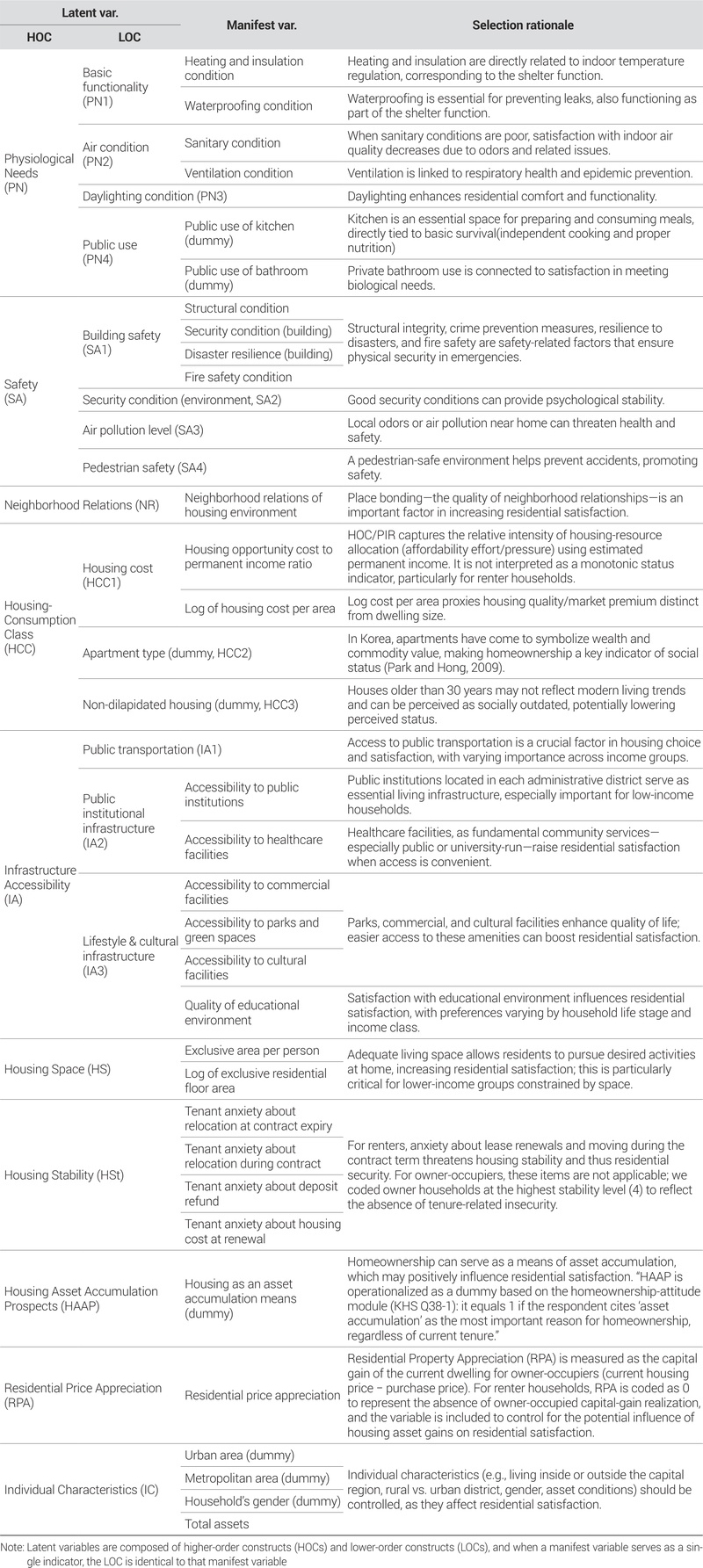
Manifest variables for the latent constructs (PN, SA, HCC, HAAP, HSt, NR, IA, HS, and RS) were drawn from corresponding modules in the Korea Housing Survey, guided by prior studies. Only indicators that satisfied the loading, weight, reliability, and validity criteria were retained. The final latent constructs, their observed indicators, and the theoretical rationale for selection are summarized in <Table 1>.

Variables and their selection rationale for residential satisfaction analysis
Several constructs were modeled hierarchically with multiple LOCs aggregated into HOCs. For example, Physiological Needs (PN) and Safety (SA) each comprise four LOCs, while Infrastructure Accessibility (IA) was partitioned into three sub-dimensions. Housing-Consumption Class (HCC) combines indicators of both economic standing (e.g., permanent income burden, log housing cost per area) and symbolic status markers (e.g., apartment type, housing age). HCC is operationalized as a housing-related socioeconomic position, reflecting market premiums and symbolic cues embedded in housing outcomes. Consistent with arguments that housing quantity and quality is distinct dimensions (Zavisca and Gerber, 2016), we model dwelling size separately as Housing Space (HS), while HCC focuses on quality/status premiums and symbolic cues embedded in housing-market outcomes.
This LOC–HOC specification not only secures measurement invariance across groups but also preserves theoretical granularity in construct design. Full details are provided in <Table 1>.
Most observed indicators directly used the survey’s four-point Likert responses directly. However, variables related to housing costs and dwelling area were constructed using derived metrics. Housing cost variables (including HOC/PIR) were constructed using an auxiliary permanent-income proxy and tenure-consistent housing cost definitions (user cost for owners; deposit-adjusted rent for renters).2)
5. Structural Model and Hypotheses
The structural model incorporates six latent constructs – PN, SA, HS, HCC, IA, and NR- with RS as the endogenous outcome. Constructs such as PN, SA, and IA are specified hierarchically through LOC–HOC design to ensure both measurement invariance and theoretical granularity. The overall structural specification, along with the associated research hypotheses (H1–H5), is depicted in <Figure 1>.
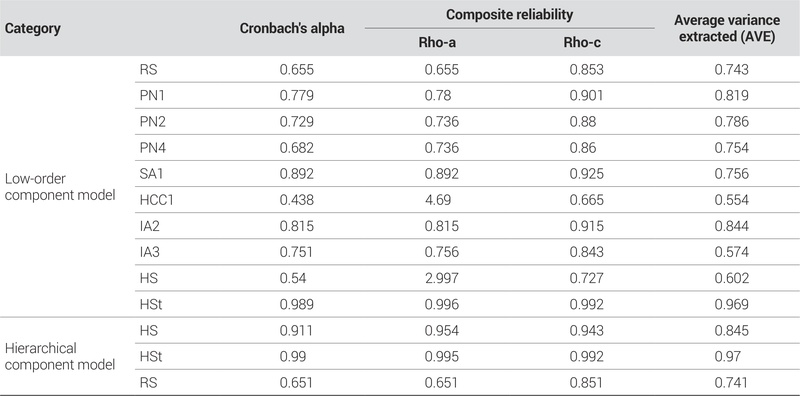
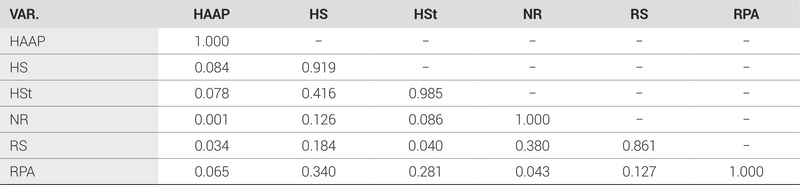
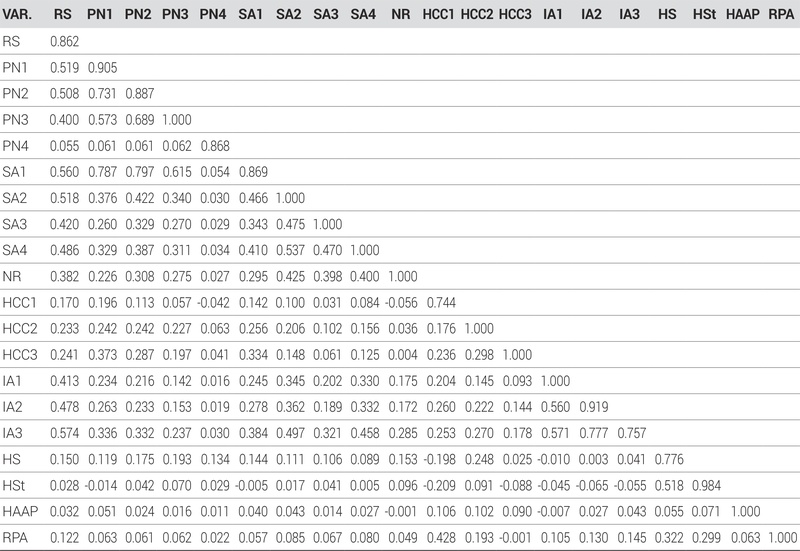
The variables presented above achieved adequate reliability and validity in both the first‐stage and second‐stage models (Appendix Table A1). In the lower‐order component model, Cronbach’s alpha fell below the 0.70 threshold for RS, HCC1, and HS; likewise, composite reliability (Rho-a) failed to reach 0.70 for RS. However, composite reliability (Rho-c) and average variance extracted (AVE) both met their respective benchmarks of 0.70 and 0.50. Moreover, Dijkstra–Henseler’s ρA for HCC1 and HS (lower‐order constructs) exceeded 1.0 (4.69 and 2.997, respectively), indicating Heywood cases; we therefore relied on the remaining reliability indices for confirmation. Finally, the Fornell–Larcker criterion for both models demonstrated that discriminant validity was adequately established (Appendix Tables A1 and A2).
Ⅳ. Results
1. Determinants of Residential Satisfaction
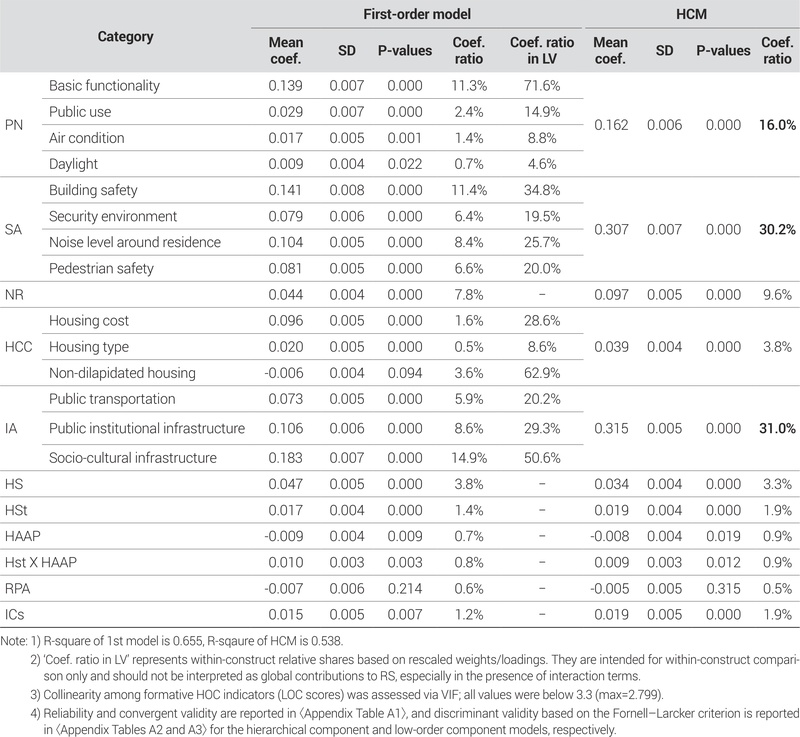
The hierarchical component model (HCM, <Table 2>) reveals that infrastructure accessibility (31%) and safety (30.2%) are the most influential determinants of residential satisfaction, followed by physiological needs (17%).
Result of two-stage disjoint PLS-SEM
Next, satisfaction with neighborhood relations (NR) accounts for 9.6% of the variance, while housing-consumption class (HCC, 3.8%) and housing space (HS, 3.3%) are relatively less influential factors in this decomposition. Housing stability (HSt)–which captures tenure security–also has a significant positive effect on residential satisfaction. Interestingly, individuals who view housing as a means of asset accumulation (HAAP) exhibit lower satisfaction overall; however, this negative effect is offset when housing stability is secured, as evidenced by a positive interaction between HSt and HAAP.
Residential price appreciation (RPA) emerges as a statistically significant negative predictor of housing satisfaction. In the hierarchical component model, all constructs except RPA are statistically significant. Notably, the Non-Dilapidated Housing variable (indicating an asset with a service life of 30 years or less) is significant at the 10% level.
In the analysis results of the first-order model and HCM (Table 2), the relative magnitudes of the path coefficients among HOCs are nearly identical.
Within these constructs, key indicators include basic functionality (waterproofing, insulation) under physiological needs; structural safety, noise levels around the residence, and pedestrian safety under safety; and accessibility to both utilitarian and socio-cultural infrastructure.
Among the safety‐related variables, building safety captures the structural safety of the building itself, whereas security environment, noise level around the residence, and pedestrian safety pertain to the external environment. In the stage-one model, external environment safety shows a larger within-construct share than building safety (21.4%, 11.4%) under our linear, descriptive decomposition. Within infrastructure accessibility, access to socio-cultural infrastructure has the largest within-construct share (50.6%), followed by public institutional infrastructure (8.6%) and public transportation access (5.9%). These shares are reported to rank indicators within each construct.
Regarding housing space, most respondents have secured at least the minimum required floor area. Because communal access features are already captured under physiological needs, housing space has a relatively small impact on satisfaction. For physiological needs, basic functionality indicators (insulation, waterproofing) are most important, but communal utility use, indoor air quality, and natural daylight also show significance–though at lower shares of 2.4 %, 1.4 %, and 0.7 %, respectively.
2. Differential Determinants across Income Strata
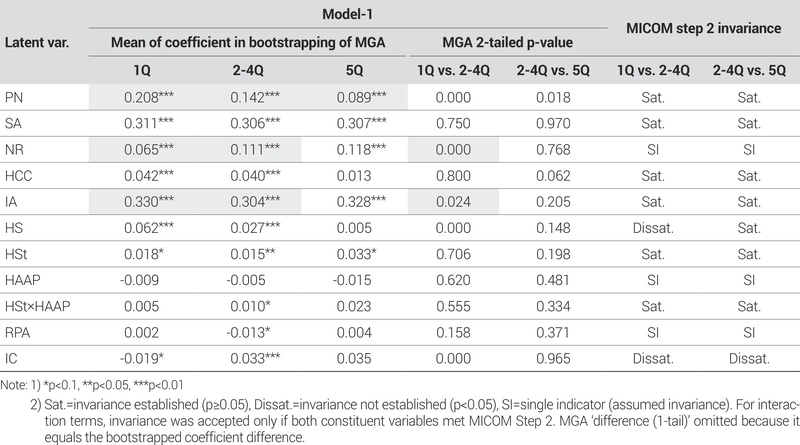
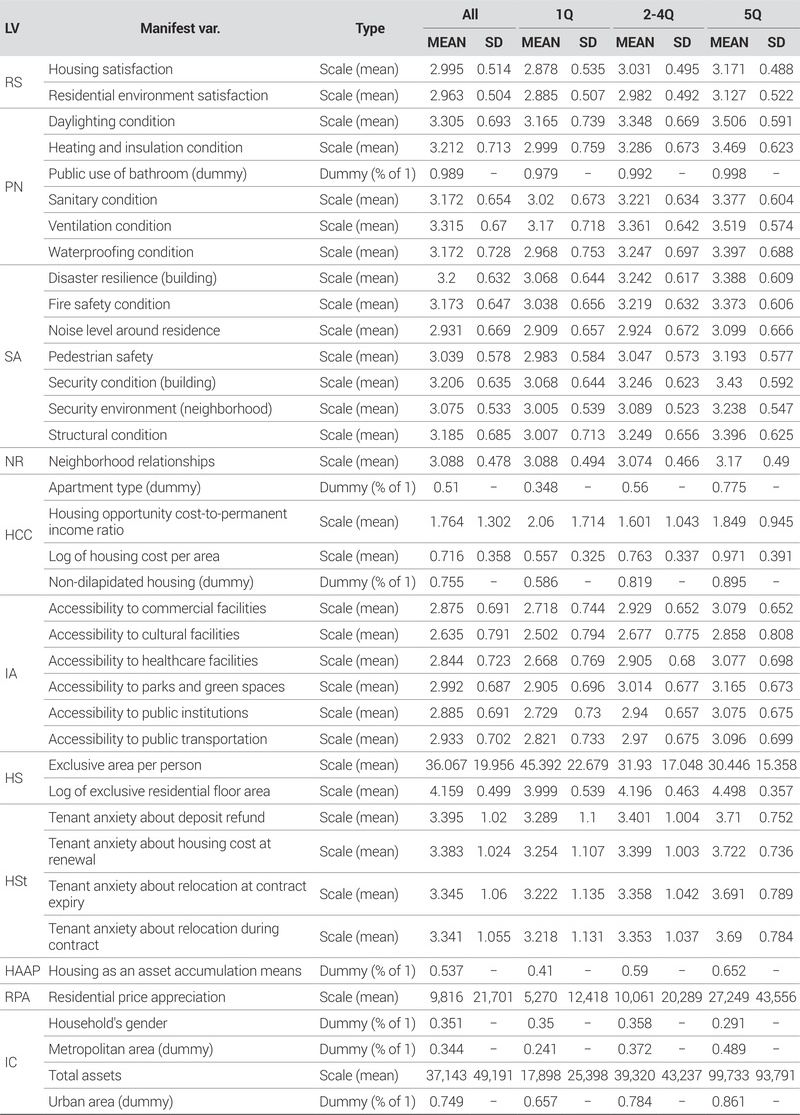
The results of the Multi-Group Analysis are presented in <Table 3>, and we interpreted the variables that exhibited statistically significant differences across groups while satisfying the Step 2 (compositional invariance) requirement of the MICOM procedure. Because MICOM Step 3 is required for latent mean/variance comparisons, which we do not conduct, our group comparisons are limited to MGA of structural paths under compositional invariance (Step 2). <Appendix Table A4> reports descriptive statistics for the manifest variables by income group.
Results of MGA and MICOM step 2 (Model-1)
Multi-group comparisons indicate that the importance of Physiological Needs (PN) increases as income decreases. Specifically, the PN path coefficient for the middle-income strata (2nd–4th quintiles) is significantly lower than that of the low-income stratum and significantly higher than that of the high-income stratum (5th quintile). Bootstrap results corroborate this pattern, showing that the PN coefficient rises stepwise as income stratum decreases.
The coefficient for Neighborhood Relations (NR) in the middle-income group does not differ significantly from that of the high-income group, but it is significantly higher than that of the low-income group. Specifically, the NR coefficient for low-income households (0.065) is roughly half that of the middle-income group (0.111). This indicates that while NR remains a significant predictor of residential satisfaction across all groups, the estimated NR→RS effect is smaller for low-income households. Although Infrastructure Accessibility (IA) coefficients do not exhibit substantial differences between income groups, IA proves to be a significantly more important determinant for the low-income group compared to others.
Bootstrapped estimates for Housing Space (HS) are not statistically significant in the high-income group. Accordingly, despite a significant MGA test, we do not interpret cross-group HS coefficient comparisons because HS fails compositional invariance. We therefore report group-specific bootstrapped estimates descriptively (1Q: 0.062***; 2–4Q: 0.027***; 5Q: 0.005, n.s.), which suggest a decreasing pattern across strata and are consistent with diminishing marginal relevance of housing area once space adequacy is secured.
For Housing-Consumption Class (HCC), the path coefficient differs significantly between the middle- and high-income strata at the 10% level, while showing no significance within the high-income stratum. This indicates that, among high-income households, variations in HCC (as measured by housing cost, newness, etc.) exert a weaker–or statistically insignificant–influence on residential satisfaction, especially when compared to the stronger and significant effects observed in other strata.
Safety (SA) and Housing Stability (HSt) emerge as consistently important determinants across all income strata, with no significant group differences. In contrast, the Housing as an Asset Accumulation Purpose (HAAP) variable fails to achieve significance in any stratum-specific bootstrapping. Residential Property Appreciation (annual return) yields a significant negative coefficient only for the middle-income stratum at the 10% level.
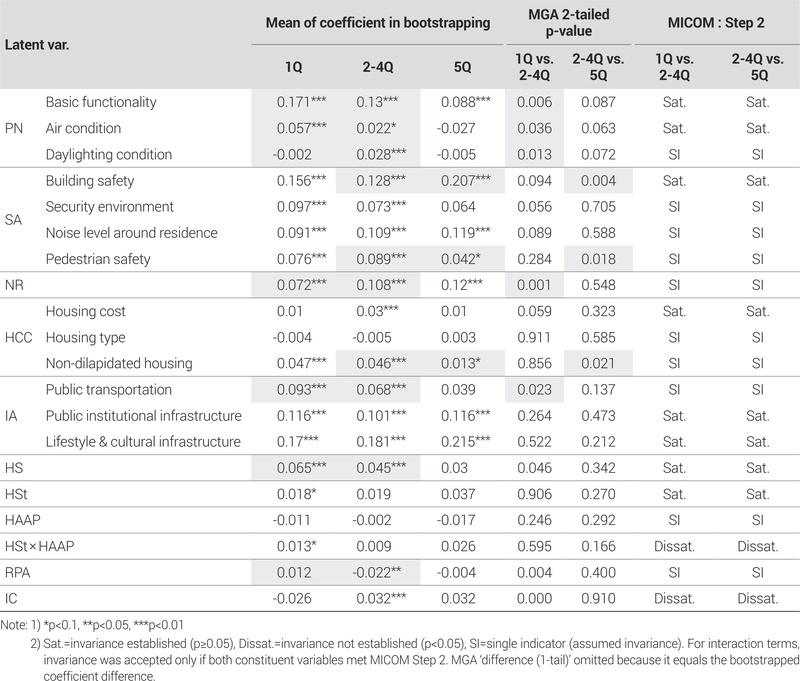
The stage-one model results (Table 4) enable a detailed examination of differences among the lower-order composites (LOCs) that comprise the higher-order constructs (HOCs). All lower-order composites (LOCs) tied to Physiological Needs (PN) exhibit statistically significant differences at the 5% level between low- and middle-income groups, and at the 10% level between middle- and high-income groups. In particular, basic functionality and air conditioning show larger coefficients in lower-income strata, underscoring their importance. Group-specific bootstrap analyses indicate that the effects of daylight and air conditioning are not significant for the highest- and lowest-income groups, implying that within those strata, these attributes either do not differ substantially or do not significantly influence housing satisfaction.
Result of MGA for LOC variable
The overall effect of the Safety dimension on residential satisfaction does not differ across income strata, but several LOCs within the Safety construct exhibit significant group differences. According to the MGA results, building safety is more important for high-income households, whereas pedestrian safety is less influential. Within the housing consumption class dimension, non-dilapidated housing is a relatively weaker contributor to satisfaction for the high-income stratum. Some LOCs fail to reach significance in group-specific bootstrapping, which may reflect pronounced differences in housing tenure and cost burdens across income groups.
Within the Infrastructure Accessibility (IA), the public transportation access (IA1) is the only lower-order composite showing clear differences between income strata. The difference in IA-to-RS between low- and middle-income strata stems from the greater weight that low-income households place on the public transportation LOC. No statistically significant difference emerges between middle- and high-income households for IA1-to-RS, and the high-income bootstrap test is non-significant. Moreover, the path coefficient for the public transportation LOC systematically diminishes from low- through middle- to high-income groups. With respect to Infrastructure Accessibility, low-income groups demonstrate greater sensitivity to Public Transport accessibility and reduced sensitivity to Socio-Cultural Infrastructure accessibility.
3. Interaction Effects and Conditional Mechanisms
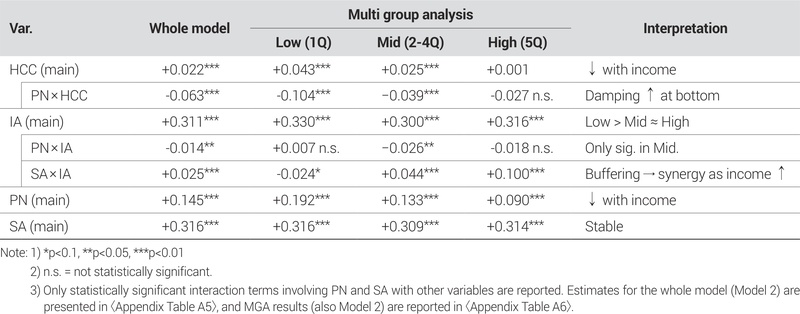
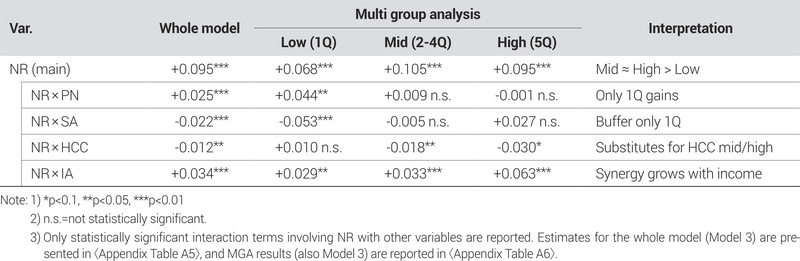
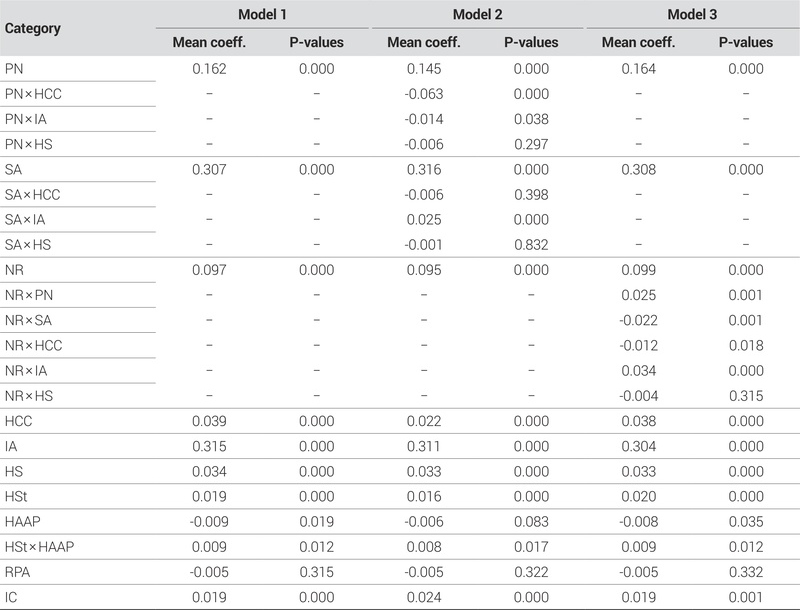
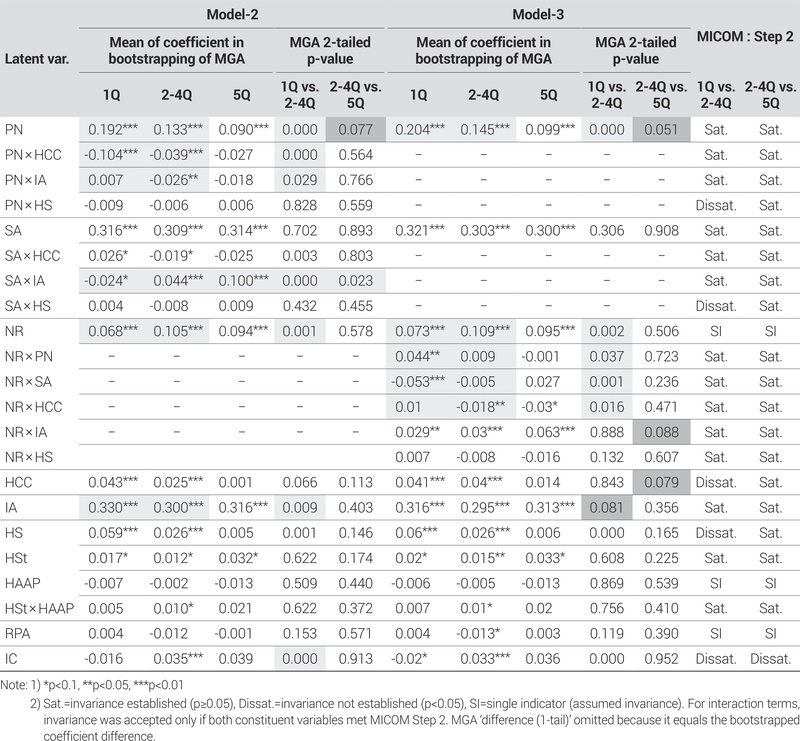
We estimated two HCM specifications: Model 2, which incorporates interaction terms between PN (physiological needs) and SA (safety) and other variables motivated by Maslow’s hierarchy of needs, and Model 3, which operationalizes social capital theory. The full results are reported in <Appendix Table A6>, and the corresponding MGA (multi-group analysis) results are provided in <Appendix Table A7>. As a side-by-side comparison of all coefficients can be cumbersome, we extracted only the interaction terms that were statistically significant and summarized them in <Tables 5 and 6>.
Results of interaction model: PN & SA
Results of interaction model: NR
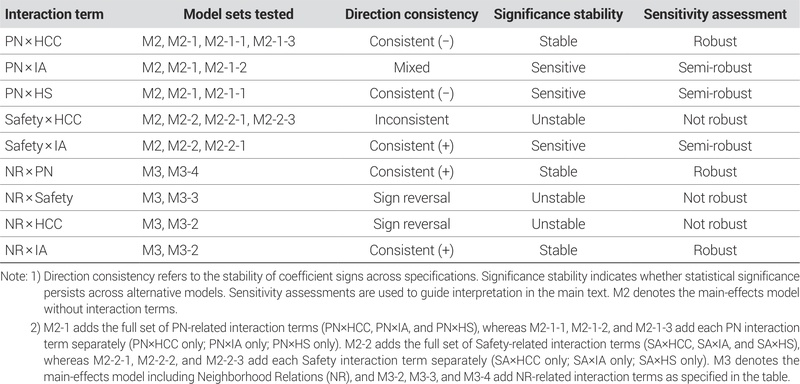
To assess whether these interaction effects are sensitive to model specification, we estimated a range of alternative models with different interaction sets. A summary of robustness assessments is reported in <Appendix Table A7>.
The interaction term PN×HCC is significant and negative in the whole model, indicating a damping effect of physiological needs on housing-consumption class. This damping effect is strongest in the low-income group, where the absolute coefficient is substantially larger than in the middle- and high-income groups.
Notably, the PN×HCC interaction is significant and negative (-0.063). Accordingly, the marginal effect of HCC on residential satisfaction weakens as PN satisfaction increases. This attenuation is strongest in the low-income group (-0.104) and remains significant in the middle-income group (-0.039), whereas the interaction term is not statistically significant among high-income households.
The interaction term PN×IA is also significant and negative in the whole model, but this effect is only significant in the middle-income group.
SA exhibits a synergistic effect with IA: adequate safety perceptions maximize the benefit of infrastructure accessibility, while inadequate safety attenuates IA’s effect. The interaction between Safety (SA) and Infrastructure Accessibility (IA) demonstrates a synergistic effect among middle- and high-income groups, with the effect most pronounced in the high-income stratum. By contrast, in the low-income group, the SA×IA interaction exhibits a complementary (buffering) pattern, showing a negative coefficient that is marginally significant at the 10% level.
Neighborhood relations satisfaction (NR) exhibits income-contingent contextual effects: it amplifies the impacts of PN and IA only in specific strata. The synergy between NR and PN emerges only among low‐income households–indicating that the amplification of higher‐order satisfaction via strong NR under fulfilled PN is statistically significant solely in this stratum, likely because PN deficits persist there. The synergistic interaction between NR and IA suggests that when neighborhood relations are strong, residents derive greater satisfaction from accessing social infrastructure. This synergy effect is more pronounced in the high‐income stratum than in the middle‐ or low-income strata, highlighting the stratum-specific nature of NR’s contextual role.
Meanwhile, NR attenuates the effects of SA and HCC, indicating that the utility of these determinants varies with NR level. The NR×SA interaction term is negative, implying that high NR partially compensates for low perceived safety. Notably, this compensatory effect is statistically significant only among low-income households, indicating that the buffering role of NR is specific to this stratum.
NR appears to buffer HCC deficiencies in middle- and high-income groups. Specifically, when HCC satisfaction is low, strong NR is associated with sustained or even enhanced levels of residential satisfaction. From a complementary perspective, NR and HCC represent distinct resources whose joint configuration matters. However, when HCC is already well satisfied, the compensatory role of NR becomes less relevant, as there is little deficiency left to buffer. In contrast, the NR×HCC interaction term is not significant for low-income households, providing no clear evidence that NR buffers the association between low HCC and residential satisfaction in this stratum.
4. Supplementary Directional Mediation Checks
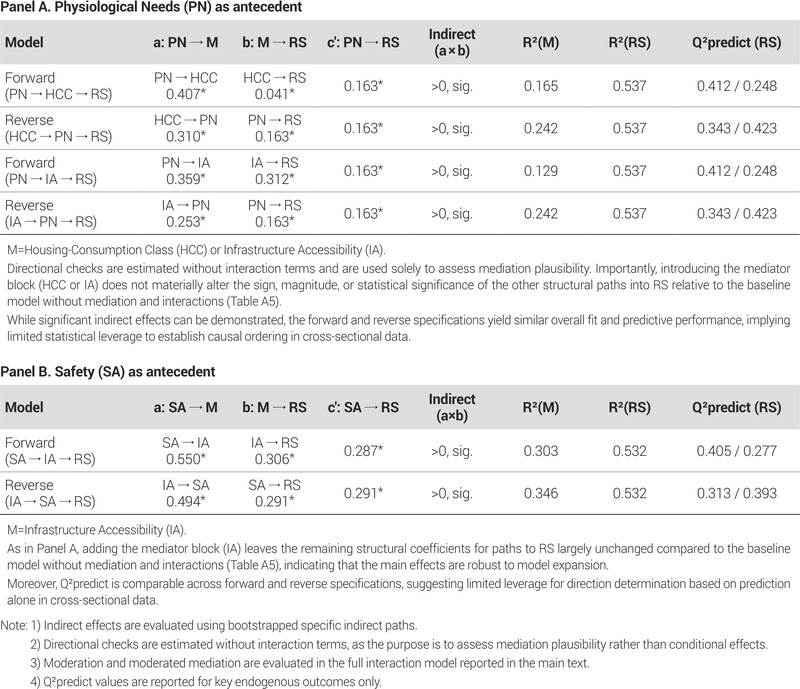
<Appendix Table A8> reports supplementary directional mediation checks. Indirect effects are statistically significant in both forward and reverse specifications, with only modest differences in R² and Q²predict. Adding the mediator block does not materially alter the interaction estimates or the remaining structural paths into RS relative to the baseline model.
Ⅴ. Discussion
1. Determinants of Residential Satisfaction
As residential satisfaction is determined by subjective perceptions and contextual conditions(Morris and Winter, 1975; Galster, 1985), infrastructure accessibility and safety emerge as the most essential factors for its improvement, with safety assuming particular importance as a fundamental prerequisite in Korea.
The coefficient of HAAP is statistically negative, contrary to our expectation that post‐purchase gains would generate a psychological halo effect–whereby rising prices for otherwise equivalent dwellings enhance satisfaction through improved self‐image of one’s home. Instead, it appears that occupants may be willing to endure minor inconveniences in anticipation of future capital gains, resulting in a net decline in immediate satisfaction.
The non‐significance of RPA can be interpreted in two ways. First, our measure of housing satisfaction is only captured by two dimensions–satisfaction with the dwelling itself and satisfaction with the residential environment–which may fail to capture the impact of price appreciation. Second, while housing price appreciation may contribute to overall life satisfaction, its effect may become negligible once other key determinants are controlled for. These results are mirrored in the stage-one (LOC) model, where RPA likewise failed to reach significance.
Given the consistency between the two models, the stage-one (LOCs) model served as a suitable basis for examining the nuanced characteristics of the latent constructs.
The results of the LOC model suggest that, beyond maintaining core building safety and essential performance (waterproofing and insulation), public support should prioritize securing safe external environments (security measures, noise mitigation, pedestrian safety) and ensuring access to both public transportation and institutional infrastructure as key drivers of residential satisfaction.
2. Differential Determinants across Income Strata
The finding that safety emerges as a universal and non-negotiable determinant of residential satisfaction can be interpreted as evidence of its role as a baseline policy requirement. Subconstruct-level differences show distinct priorities: high-income households place relatively greater importance on building-structural safety (e.g., disaster prevention, security fixtures, structural integrity). Given their already superior housing conditions, high-income households appear less motivated by improvements in structural safety and more focused on mitigating external hazards such as noise and pedestrian risks.
In contrast, for low-income households, external environmental factors (e.g., pedestrian safety, security) emerge as salient determinants, consistent with the findings of Lee and Namgung (2018). They appear relatively less sensitive to external noise, as noise can be adapted to over time, whereas external safety concerns, such as crime prevention, are factors that individuals cannot easily control or accommodate. These findings underscore the need for targeted environmental design interventions–such as CPTED (Crime Prevention Through Environmental Design)–in densely populated, low-income neighborhoods.
Unlike safety, other determinants of residential satisfaction shift markedly with income, indicating that housing-environment interventions should be tailored to the specific priorities of each income stratum.
The fact that physiological needs dominate among low-income households can be interpreted as reflecting their greater reliance on improvements in waterproofing, insulation, and indoor air quality, consistent with Park and Lim (2020). By contrast, for middle- and high-income strata, the stronger effect of lifestyle and cultural infrastructure suggests that basic functionality is relatively secured.
For low-income households, where physiological needs remain critical, improvements in waterproofing, insulation, and indoor air quality outweigh neighborhood relations, pedestrian amenities, or cultural facilities. By contrast, among middle- and high-income strata, access to lifestyle and cultural infrastructure exerts a stronger influence than basic functionality. Although the low-income stratum does not report markedly lower effect of neighborhood relations (NR) than the other strata, the MGA results show that the NR→RS path is significantly weaker in the low-income stratum, as also reported for housing-vulnerable households (Park and Lim, 2020). This indicates that improvements in NR are less strongly reflected in overall residential satisfaction (RS) for low-income households.3)
In high-density, low-income areas, policy interventions may be most effective when prioritizing improvements in public transit and minimum housing quality rather than expanding socio-cultural services. Illustrative measures include bus-route optimization, TOD-based commuter amenities, and housing repair programs targeting substandard dwellings. In contrast, as income levels rise, the importance of public transportation decreases, whereas access to cultural facilities becomes more salient. Because educational and cultural facilities are associated with growth needs, their importance is less likely to diminish once satisfied. By contrast, other needs are subject to diminishing returns upon fulfillment, as is characteristic of deficiency needs.
Housing-consumption class emerges as a more important determinant for low- and middle-income households than for high-income households. It may be because housing-consumption attributes captured by HCC (e.g., dilapidation and cost burden) are more binding constraints for low- and middle- income households, while other attributes like housing-related social prestige matter less across all income groups. Particularly, the cost-burden component embedded in HCC matters primarily for the middle-income stratum, as it constitutes a substantial burden for low-income households but may not affect residential satisfaction among high-income households, who generally possess sufficient financial capacity to absorb such expenses.
Accumulation exerts a negative effect only within the middle-income group. This may suggest that middle-income households endure minor inconveniences–such as postponing relocation–in anticipation of future capital gains, a behavior that paradoxically diminishes their immediate housing satisfaction. However, this result may also be attributable to the design of this study, in which residential satisfaction was modeled as a latent construct combining both dwelling-level and neighborhood-level satisfaction.
3. Interaction Effects and Conditional Mechanisms
The interaction results point to context-dependent need dynamics rather than uniform, additive effects. Here, “conditionality” refers to moderation across domains rather than a strict stage-wise progression of needs. As shown in <Tables 5–6>, the negative PN×HCC term indicates that the relevance of HCC for residential satisfaction varies with baseline habitability (PN), with the strongest pattern observed in the lower-income stratum. Importantly, this does not reclassify HCC as a “basic” need; rather, in disadvantaged strata, HCC-related market signals may operate as basic-like buffers against insecurity and social exclusion, consistent with overlap and reweighting under constraint. Drawing on Kenrick et al.’s (2010) “renovated” view, this conditionality can be interpreted as broadly compatible with reweighting across overlapping motivational systems under constraint. Substantively, HCC may capture residual market premiums beyond measured accessibility (IA)–including employment accessibility, neighborhood prestige/scarcity/views, and design-related amenities–whose marginal contribution to residential satisfaction may taper as basic dwelling habitability is secured, reflecting a shift in relative salience as constraints ease.
A non-exclusive alternative is selection-based sorting: some households (in particular low-income households) may accept weaker market premiums/signals (HCC) to access dwelling fundamentals (PN), particularly under binding constraints.
Sensitivity analyses across alternative interaction sets indicate that several interaction effects identified in the full model are robust, while others are more sensitive to specification choices (Appendix Table A7). The main discussion, therefore, focuses on interaction terms that are statistically significant in the full model, reflecting effects that persist after jointly accounting for multiple conditional mechanisms. Overall, specification sensitivity does not necessarily indicate spurious effects; rather, it may reflect competing or context-dependent mechanisms that become apparent only when interactions are jointly considered.
This sensitivity is consistent with income heterogeneity, as full-sample estimates may average opposing conditional mechanisms across strata. Relatedly, directional mediation checks (Appendix Table A8) indicate tight coupling between lower-order needs (PN, SA) and broader evaluations (IA, HCC), suggesting substantive interdependence rather than a specification artifact. However, because indirect associations are supported in both forward and reverse directions, causal sequencing cannot be adjudicated in cross-sectional data; accordingly, the interaction patterns are discussed as compatible with both need-driven appraisal and residential sorting.
Notably, the specification sensitivity observed for the SA×IA and NR×HCC terms is consistent with income-group heterogeneity. Income-stratified analyses indicate that these interactions operate differently across strata, such that full-sample estimates may average competing conditional mechanisms and yield sensitivity to alternative specifications.
Meanwhile, a dampening effect of PN and IA on RS may arise among middle-income households, but not among low- or high-income groups. This likely reflects how IA (e.g., public transit) functions as a necessity for low-income households and as a consumption amenity (e.g., access to cultural and educational facilities) for high-income households, making any damping pattern less apparent at those extremes.
A synergy between SA and IA is also evident, with income-contingent heterogeneity that differs from the direct effect of SA alone. Among low-income households, IA (e.g., public transportation and healthcare access) buffers safety deficits; among middle- and high-income households, concurrently high SA and IA elevate satisfaction with social-capital–related facilities (e.g., community centers, libraries, cultural venues), thereby amplifying overall residential satisfaction.
The stronger PN effect under high NR aligns with the idea that higher-order satisfactions tend to become more salient when lower-order needs are sufficiently met, consistent with a conditioning (rather than strictly prerequisite) mechanism. Although NR exerts the weakest direct effect on residential satisfaction among low-income households, the significant NR×SA interaction indicates that social cohesion plays a compensatory role when perceived safety is low in this group. This aligns with prior work showing that social cohesion buffers harms under safety deprivation (Choi and Matz-Costa, 2018) and is consistent with the argument of Sampson et al. (1997) that strong neighborhood cohesion mitigates the adverse effects of crime and other risk factors. For low-income households, improving NR is therefore most effective for raising residential satisfaction when PN is satisfied, but SA is lacking.
Furthermore, the results suggest that NR may compensate for HCC where HCC is lacking but NR is strong. In such contexts, NR provides the social support and recognition that HCC-related status signals would otherwise confer, stabilizing or even enhancing residential satisfaction despite low HCC. This pattern is consistent with evidence that high social capital–of which NR is a key component–attenuates the influence of income and status comparisons on subjective well-being (Bartolini et al., 2023). By contrast, the absence of a significant NR×HCC interaction among low-income households suggests that, in more structurally disadvantaged contexts, there may be limits to the extent that social cohesion alone can offset deficits in housing-consumption class.
Ⅵ. Conclusion
This study shows that safety and infrastructure accessibility consistently drive residential satisfaction across all income groups, underscoring their universal importance for housing design and policy. In particular, safety forms a synergy with infrastructure accessibility among middle- and high-income households, serving as a critical precondition for realizing accessibility benefits.
The satisfaction of physiological needs and safety also interacts with other attributes–infrastructure accessibility and housing-consumption class–suggesting a conditional, context-dependent pattern consistent with Maslow’s hierarchy (rather than a strictly sequential ladder) in this context. In addition, neighborhood relations–a proxy for social capital–exhibit a stratum-specific contextual role, mitigating some of the negative effects associated with insufficient safety. However, the influence of neighborhood relations varies across income strata; this represents a conditional pattern that is more likely to emerge once basic housing performance (e.g., waterproofing and insulation) meets minimum standards.
Beyond these common factors, the relative importance of determinants varies by income: physiological housing performance becomes more salient in lower-income strata, while neighborhood relations and lifestyle-oriented amenities gain prominence in higher-income strata. Regarding interaction effects, higher physiological needs dampen HCC effects in lower and middle strata, and dampen accessibility effects in the middle stratum. Together, these patterns suggest that a strict, monotonic reading of Maslow’s hierarchy is not fully supported; instead, need domains appear to interact in a context-dependent manner in this setting.
Taken together, these income-contingent interaction patterns imply stratified policy priorities, motivating a dual strategy. For low-income communities, policymakers may prioritize deficiency-need interventions that improve physiological housing performance (e.g., waterproofing and insulation). Where feasible, these upgrades may be complemented by accessibility improvements–particularly public-transport connectivity–including transit-oriented development (TOD) measures where appropriate. For high-income neighborhoods, interventions may focus on external environmental safety and lifestyle–cultural amenities, complemented by selective social-cohesion programs where appropriate, aligned with residents’ lifestyle preferences. In more affluent areas, public interventions should be justified in terms of broader externalities and spillovers (e.g., safety spillovers or neighborhood vitality).
However, this study has several limitations. First, relying on a single cross‐section from Korea’s Housing Conditions Survey constrains the generalizability of our findings–housing‐price and cost dynamics over time, as well as regional heterogeneity, may produce different results. Second, the cross‐sectional design precludes any firm causal inferences: although we identified statistically significant interaction effects among neighborhood relations, physiological needs, and safety, these should not be interpreted as proof of causation. Accordingly, the supplementary mediation diagnostics are interpreted as correlational patterns consistent with Maslow rather than evidence on causal ordering.
Future research would benefit from panel datasets or experimental/quasi-experimental designs, where available, to more robustly assess causal relationships. It would also benefit from robustness checks using alternative modeling frameworks (e.g., CB-SEM) and datasets with better coverage of the upper-income tail, as well as from further validation of hierarchical (HOC–LOC) measurement and cross-group comparability, which would strengthen inference for hierarchical constructs and high-income estimates.
Acknowledgments
This study is a revised and extended version of a paper presented at the 2025 ICAPPS (International Conference of Asia-Pacific Planning Societies).
References
-
Bartolini, S., Piekalkiewicz, M., Sarracino, F., and Slater, G., 2023. “The Moderation Effect of Social Capital in the Relationship between Own Income, Social Comparisons and Subjective Well-being: Evidence from Four International Datasets”, PLOS ONE, 18(12): 1-25.
[https://doi.org/10.1371/journal.pone.0288455]

-
Choi, Y.J. and Matz-Costa, C., 2018. “Perceived Neighborhood Safety, Social Cohesion, and Psychological Health of Older Adults”, The Gerontologist, 58(1): 196-206.
[https://doi.org/10.1093/geront/gnw187]
-
Du, T., Zeng, N., Huang, Y., and Vejre, H., 2020. “Relationship between the Dynamics of Social Capital and the Dynamics of Residential Satisfaction under the Impact of Urban Renewal”, Cities, 107: 102933.
[https://doi.org/10.1016/j.cities.2020.102933]
-
Galster, G.C., 1985. “Evaluating Indicators for Housing Policy: Residential Satisfaction vs Marginal Improvement Priorities”, Social Indicators Research, 16(4): 415-448.
[https://doi.org/10.1007/BF00333289]
-
Glaeser, E.L., Laibson, D., and Sacerdote, B., 2002. “An Economic Approach to Social Capital”, The Economic Journal (London), 112(483): 437-458.
[https://doi.org/10.1111/1468-0297.00078]
- Glazer, A. and Konrad, K.A., 1996. “A Signaling Explanation for Charity”, The American Economic Review, 86(4): 1019-1028.
-
Henseler, J., Ringle, C.M., and Sarstedt, M., 2016. “Testing Measurement Invariance of Composites Using Partial Least Squares”, International Marketing Review, 33(3): 405-431.
[https://doi.org/10.1108/IMR-09-2014-0304]
-
Hesari, E., Peysokhan, M., Havashemi, A., Gheibi, D., Ghafourian, M., and Bayat, F., 2019. “Analyzing the Dimensionality of Place Attachment and Its Relationship with Residential Satisfaction in New Cities: The Case of Sadra, Iran”, Social Indicators Research, 142(3): 1031-1053.
[https://doi.org/10.1007/s11205-018-1949-5]
-
Jung, S. and Lee, J., 2023. “Exploring a Conceptual Framework of Koreans’ Residential Satisfaction Based on Maslow’s Human Needs: A Qualitative and Quantitative Integrated Study”, Sustainability, 15(19): 14312.
[https://doi.org/10.3390/su151914312]
-
Kang, S.J. and Seo, W., 2022. “Do People Determine Their Subjective Socioeconomic Status Based on the Housing Type and Residential Neighborhood? Empirical Evidence from Seoul”, Land, 11(11): 2036.
[https://doi.org/10.3390/land11112036]
-
Kenrick, D.T., Griskevicius, V., Neuberg, S.L., and Schaller, M., 2010. “Renovating the Pyramid of Needs: Contemporary Extensions Built Upon Ancient Foundations”, Perspectives on Psychological Science, 5(3): 292-314.
[https://doi.org/10.1177/1745691610369469]
-
Kim, J.S. and Kim, J.M., 2017. “The Relation between Housing Needs and Housing Function according to the Maslow’s Theory of Needs”, KIEAE Journal, 17(4): 13-19.
[https://doi.org/10.12813/kieae.2017.17.4.013]
-
Lee, S.J. and Namgung, M., 2018. “A Study on Factors Influencing Residential Satisfaction by Income Class”, Journal of Governance Studies, 13(3): 121-146.
[https://doi.org/10.16973/jgs.2018.13.3.005]
- Maslow, A.H., 1970. Motivation and Personality (2nd ed.), New York: Harper & Row.
-
McCray, J.W. and Day, S.S., 1977. “Housing Values, Aspirations, and Satisfactions as Indicators of Housing Needs”, Home Economics Research Journal, 5(4): 244-254.
[https://doi.org/10.1177/1077727X7700500404]
-
Mohit, M.A. and Al-Khanbashi Raja, A.M.M., 2014. “Residential Satisfaction-concept, Theories and Empirical Studies”, Planning Malaysia, 12(3): 47-66.
[https://doi.org/10.21837/pmjournal.v12.i3.131]
-
Morris, E.W. and Winter, M., 1975. “A Theory of Family Housing Adjustment”, Journal of Marriage and Family, 37(1): 79-88.
[https://doi.org/10.2307/351032]
-
Newman, S. and Holupka, C.S., 2016. “Housing Affordability And Children’s Cognitive Achievement”, Health Affairs, 35(11): 2092-2099.
[https://doi.org/10.1377/hlthaff.2016.0718]
-
Park, K., 2025. “Satisfied with People or Place?: A Study of the Relationship between Social Ties, Place Attachment, and Residential Satisfaction among Relocatees”, Cities, 159: 105746.
[https://doi.org/10.1016/j.cities.2025.105746]
-
Putnam, R.D., 2000. Bowling Alone: The Collapse and Revival of American Community, New York: Simon & Schuster.
[https://doi.org/10.1145/358916.361990]
- Park, Y.H. and Lim, H.C., 2020. “A Comparative Study on the Determinants of Residential Satisfaction between Housing Vulnerable Groups and the Middle Class Households”, GRI Review, 22(1): 273-300.
-
Park, S.J. and Hong S.Y., 2009. “Social Conspicuousness and Housing Culture in Korea – In Comparison to the Case of Japan”, Discourse 201, 11(4): 35-61.
[https://doi.org/10.17789/discou.2009.11.4.002]
-
Sampson, R.J., Raudenbush, S.W., and Earls, F., 1997. “Neighborhoods and Violent Crime: A Multilevel Study of Collective Efficacy”, Science, 277(5328): 918-924.
[https://doi.org/10.1126/science.277.5328.918]
- Seo, W.S. and Kang, M.S., 2017. “Analyzing Residential Features Affecting Long-Term Housing Demand of Household using Modified Mankiw-Weil Model”, Journal of the Korea Real Estate Society, 35(3): 5-23.
-
Shamsuddin, S. and Campbell, C., 2022. “Housing Cost Burden, Material Hardship, and Well-Being”, Housing Policy Debate, 32(3): 413-432.
[https://doi.org/10.1080/10511482.2021.1882532]
- Smith, K.M., 2011. “The Relationship between Residential Satisfaction, Sense of Community, Sense of Belonging and Sense of Place in a Western Australian Urban Planned Community”, Ph.D. Dissertation, Edith Cowan University.
-
Tay, L. and Diener, E., 2011. “Needs and Subjective Well-Being Around the World”, Journal of Personality and Social Psychology, 101(2): 354-365.
[https://doi.org/10.1037/a0023779]
-
Wang, F. and Wang, D., 2019. “Changes in Residential Satisfaction after Home Relocation: A Longitudinal Study in Beijing, China”, Urban Studies, 57(3): 583-601.
[https://doi.org/10.1177/0042098019866378]
-
Wei, S.J., Zhang, X., and Liu, Y., 2017. “Home Ownership as Status Competition: Some Theory and Evidence”, Journal of Development Economics, 127: 169-186.
[https://doi.org/10.1016/j.jdeveco.2016.12.001]
-
Zavei, S.J.A.P. and Jusan, M.M., 2012. “Exploring Housing Attributes Selection based on Maslow’s Hierarchy of Needs”, Procedia - Social and Behavioral Sciences, 42: 311-319.
[https://doi.org/10.1016/j.sbspro.2012.04.195]
-
Zavisca, J.R. and Gerber, T.P., 2016. “The Socioeconomic, Demographic, and Political Effects of Housing in Comparative Perspective”, Annual Review of Sociology, 42(1): 347-367.
[https://doi.org/10.1146/annurev-soc-081715-074333]
Appendix
Appendix
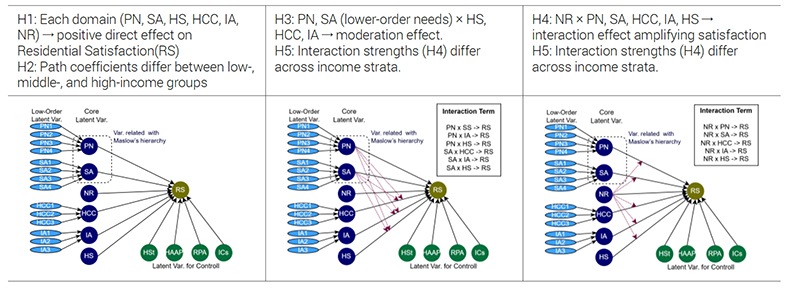
Hypotheses and Structural Model of the Study
Reliability and convergent validity of stage-1 (low-order) and stage-2 (hierarchical) disjoint two-stage PLS-SEM models
Fornell-Larcker criterion of hierarchical component model
Fornell-Larcker criterion of low-order component model
Mean of manifest variable by income group
Result of HCM including interaction terms
Results of MGA and MICOM step 2 (Model-2 & 3)
Sensitivity of interaction effects across alternative model specifications
Directional checks with alternative mediators